


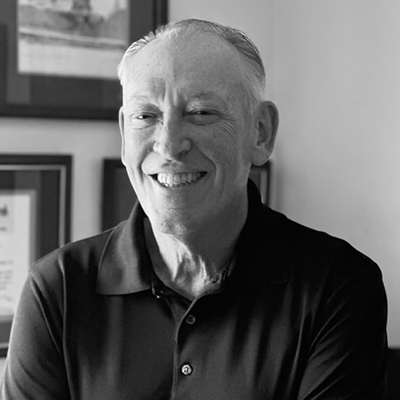
Sales Success Secrets: Scaling Teams And Driving Growth With Don Lazzari
We got a great guest, Mr. Don Lazzari. The company is DeliveringValue.com. We’re going to bring Don in just in a moment. We’re going to talk about, if you’re the only salesperson, how do you succeed in your company? If you’re here and you want to build and motivate and scale a high-performance sales engine, a team, we’re going to talk about that.
We’re also going to talk about how do you harness the power of sales vital signs. Those things that you should be focused on, not just KPIs, but the sales vital signs to drive growth. Speaking of driving growth, if you are looking for reliable, predictable, and measurable revenue growth, we are going to be running out of a process and a program and we’re looking for our founder’s group right now.
If you’re interested in that, I want you to please reach out to YouMatter@CEOSalesStrategies.com and say in the subject line “founders group”, and we will communicate with you and provide you with more information on that. It is about mathematically how to grow your revenue and what you must put behind that as a system. All turnkey and complete for you.
Without further ado, let’s go talk to Don about some entrepreneurial sales secrets on how do you succeed in different venues or different avenues as the only salesperson, building a high-performing sales engine team, and how to harness the power of vital growth signs, sales vital growth in your business. Here we go.
—
Don, welcome to the show. Thanks so much for being here.
A pleasure to be here.
I’m super excited to have you on, not only for the content, but you’ve got some Italian blood. I feel like we’ve got some family connection going on here as well.
We’ll have to share some recipes when we’re done.
Navigating As The Only Salesperson
Why don’t you tell everybody what you do and let’s set the frame for this and then we’ll go into our topics.
Up until fifteen years ago, I was effectively a career sales guy, selling technologies, mainly new technologies all over the U.S. and then eventually all over the U.S. and Europe. In 2010, I started my consulting business, delivering value to help emerging companies, which is where when I was in my career, I really felt like it was the most exciting environment to be in when you’re working for small and emerging companies. The company’s been devoted to helping CEOs of those companies grow, understand more about sales, understand more about how to sell when they’re on their own, and how to build scale teams and have them deliver on the number repeatedly.
What a concept, to have a sales team to repeatedly deliver. Let’s talk about solo, like how to succeed when you’re the only salesperson at your company, it’s you or you have a team of people, but you’re still the major sales entity in the company. I was just talking to a gentleman and he’s like, “I’m still doing a third of the sales and we’re five years in.” What do you do when you’re the only salesperson in the company? How how do we navigate that?
A couple of things. I think the first thing you have to do is realize that the value of your product isn’t necessarily self-evident to your audience. You really have to make sure you connect those dots and you have to avoid snowing people under with a potpourri of features. In the book, we talk about developing your big three and that would be what are the three main messages that you want to get across to the folks who are potentially buying your product.
The reason there are only three is, one, that’s about all most people can remember. Two, when you look at studies, an hour after a presentation, people only remember 50%. A couple of days later, that’s down to 10%. By next week, it’s a headline. You better make sure you have a good headline. In journalism, don’t bury the lead. You’ve got to be sure that you do that. I urge folks to take some time to distill their benefits down so that you can categorize the features underneath them.
Let me be more specific with an example from one of my current clients where they sell monitoring systems for noxious gases that are typically used in sterilization. They put their benefits into three buckets. One is safer workplaces, two is reduced risk, and three is next-level protection. That’s something that practically everyone can remember and associate with the company, but when they’re selling, everything bolts back into that. It’s almost like a refrain in music. You keep coming back to the chorus. That’s fundamental, in my opinion.
The Importance Of Keeping Sales Simple And Memorable
Our goal here is because people do forget and I don’t know, as I get a little older the memory goes quicker. We all forget. What we’re looking to do is have these three value props, if you will, be self-evident that those three things that if nothing else, they remember those three things. Correct?
Let me give you another example from a past life, selling into the senior care industry. It was a complex technology, it used speech recognition, but it would automate the Medicare and Medicaid documentation process. A very complex product with lots of moving parts. That was shrunk down to better documentation, better reimbursement, and better care. People, we repeated that like a mantra in the marketing.
We repeated that in the way we sold and people would just associate that with the company. It becomes stuck in their minds if you just continue down that path. You’ve got to develop something really good and then you’ve just got to keep reinforcing it. This is something difficult, especially for technology. Once it’s good, avoid tinkering. Get something good, then just keep repeating it. If you have a good chorus, don’t mess with it. Keep repeating.
Once it's good, avoid tinkering. Just keep repeating it. If you have a good chorus, don't mess with it. Share on XThat’s wise advice because so many CEOs and so many people in general, they’re creatives. I was just at an event, there were 700 people, and they said, “How many of you are creative?” About 97% of the room raised their hand. “How many of you are integrators?” I don’t know, like 3% raised their hand. The gentleman said, “All of you who are creative, find one of these people in between the breaks because you need them.” I thought it was a classy way of doing it. When we’re talking value, I’m going to make the assumption that we’re talking what the actual buyer or the apex decision maker, what they actually value is the value proposition we want to be pushing, not our own value system, correct?
Correct. It should be something that the customer wants more than anything else, right? I’m using my senior care example, if I were talking to the owner of a nursing home chain and told him or her that we could deliver those three things, they’d want my contact information because that drives right into the bull’s eye of their needs. Big frustration with the documentation because the reimbursement isn’t good if the documentation isn’t good. If you don’t have money, no margin, no mission.
That makes a lot of sense. We’re leaving them with those memorable thoughts. Essentially what we’re doing is we’re planting the seed not only during the conversation, but we’re creating a brand, what they’re thinking about when we’re not around, so to speak. What I like about this is it’s very duplicatable. I see so many people when they’re solos, they overwhelm people with all of this stuff. They’ve got a co-decision maker in the process that wasn’t discussed initially. Now this decision maker A has to talk to decision maker B and yeah, the salesperson missed it and should have had them both there.

Now it’s like kind of when they explain it to A and explain it to B, they’re missing the mark because they do it, they put their own spin on it. It’s the old adage, boy kisses girl. By the time the story’s over, a girl is pregnant, and it’s like, no, that didn’t happen but the reverse can happen too, where they leave information out. If you’re leaving them with that memorable three-part process, it’s easy for them to repeat and duplicate it. Essentially you’re duplicating your own efforts at that point.
You don’t want to give them features where someone then has to explain what the benefit is. I mean, that’s just classic selling there.
You and I both know this happens every single ten minutes of the day. Somebody is like, “Let me explain feature ABC.” It’s like but what’s the benefit to the buyer on the other end? Do they value that? They could have a benefit like heated seats, I don’t know, Florida. Not to pick on Florida as a state, but any southern state. I mean, maybe you use heated seats twice a year, maybe. I don’t think there are too many people clicking their heated seats on in 97-degree weather going down the highway.
Not very frequently.
Just because it’s a value to us, and that’s what I want to push through this conversation Don because I see so many people miss this. It’s what they value in those three memorable things that you’re going to leave them with that they can duplicate and the brand is created through the process. No matter who they talk to, because I’ve had this happen, like you leave and then I leave the meeting or I’m done with the meeting and then tomorrow they call another meeting and I’m not invited. They’re having twelve people having a discussion at the company and I should be there, but I’m not. If I’m not there, I better be there, at least in what you’re talking about conveying the accurate information so they can go through the process.
Why Customer Success Stories Are Critical
You better feed your champion his lines or her lines. What is it you want them to tell you when if you’re not there and they’re selling on your behalf?
Value, not making itself evident. Any other thing that if I’m a solo, I’m the only person?
Sure. A couple of quick things. One, and we’ve already touched on it. I got this quote from a book I read back in the early 2000s by the name of Paul Wiefels. He was one of the guys that worked with Geoffrey Moore in Crossing the Chasm. He wrote a book called The Chasm Companion. In that, he has a great quote that I’ve kept up on my office wall especially when I led teams full time, which was, “Do not confuse your compelling reason to sell with the prospects, compelling reason to buy.”
You really have to focus on that. The only way you’re going to get to that is by asking a lot of insightful questions. Don’t start your demo until you have really fully understood what that compelling reason to buy is and the things that make it up. The only way you’re going to do that is by asking questions and continuing to ask questions. You can win a deal with a five-minute demo if you zero in on the things that really matter. That’s fundamental. Secondarily, especially if you’re selling technology, as people become more educated on their different alternatives and really what they want, their priority list changes when it comes to decision criteria.
Think about that. What are their decision criteria? Ask them. If you could rank your top three, what would it be? “It’s going to be, it has to integrate with our medical record. It has to be able to accept physicians’ orders. It has to be able to be deployed on mobile.” Maybe after a month, they realize that everything they’re looking at is going to talk to the clinical record anyway. That’s no longer top of my list. You have to keep revisiting that and keep selling to the things that are the most important.

This sounds like great dating advice too, Don, right?
It sure is. I mean, there’s a great parallel there.
It’s like point number one, what do they value, and make that memorable. Point number two, don’t confuse your intent with the buyer’s intent. Point number three, what is the decision-making criteria?
It’s true. In coaching, I’ve told people that. I’m like, “Listen, this shouldn’t be that difficult. It’s no different than a wooing process.” In the beginning, you’re trying to get to know each other to see if you have reasons to continue to talk, and then you just have to stay on that path. I agree with you. Conceptually, it’s very similar.
Here, we not only give you valuable business information, but for those of you who are seeking a partner one way or another, there’s your formula.
I found myself single at 58, so it’s still fresh in my mind.
That’s awesome. Now, I also like the fact that you kind of secretly put the book in there, a reference of the book. I’m going to go back to that because everybody knows on this show, we just don’t pitch. You wrote a book and it’s called Entrepreneurs’ Sales Secrets Revealed, correct?
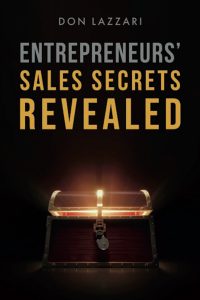
Correct.
Some of the information or all the information we’ll be talking about will also be in your book.
That’s right. As well as a lot of practical examples and templates.
Practical examples and templates. I get step-by-step instructions?
Correct.
I’m going to plug the book again. Entrepreneurs’ Sales Secrets Revealed. A lot of people love templates. They love the fact that they can just follow a process. That’s what you do. I know it’s what we do, too. We build in steps because anybody can follow the steps and get results. It’s duplicatable. That’s if I’m the only salesperson, but what if I want to build, motivate, and scale a high-performing sales engine? What do I do then?
Several things. One, you’ve got to realize that good sales talent is not a commodity. I see that mistake, or I don’t want to say mistake, but misconception a little too often. “Our product is so good. All I need is someone to make a bunch of calls. This thing’s going to sell itself.” No, it doesn’t. We all know that. You’ve got to look for people who are talented and who can convince you of that. We’ll talk about that in a second and you’ve got to be willing to pay for that.
There was a gentleman that I did a podcast with not long ago who said, “If you’re going to pay peanuts, all you’re going to get is monkeys” which I think is a wonderful turn of phrase. There’s a good reason why the good salespeople were well compensated because they can perform. How do you find them? That’s the key. Most CEOs aren’t used to hiring salespeople and we tend to be charmers just by nature. As a result, one, you’ve got to look for a drive. That’s one thing you cannot coach. You can teach skills, you cannot teach drive.
That’s something that’s intrinsic. Two, get them to tell you in detail about the deals that they’ve won, and the good ones will go down into excruciating detail about the ones they won and why they won them. Ask them again, “Tell me about one you lost.” At the end of that, say, “Why do you think you lost that?” The good ones will say, “Because I missed something or I did something strategically.” They will take responsibility for it. They won’t say, “It’s because we didn’t have a feature.” Another bit of advice is to make sure that it’s no until they’ve absolutely convinced you it’s yes, because most people interview in the other way where it’s, “We want to hire this person until they convinced me.”
The Hot Seat Interview For Sales Hiring
Otherwise, you don’t want to do that with sales and be like, “I don’t want to hire this guy or gal until they’ve talked me into it.” The fourth one and I’ve just applied this with a medical imaging client that I have in Houston – I believe if he were here, he would say he was dubious at first, but once we did it, he’s no longer dubious. I refer to it as the hot seat interview. If you’ve got a candidate that’s interviewed very well, then as a final step, you give them an assignment and say, “I want you to do a fifteen-minute pitch and prepare some slides for me.”
It doesn’t have to be anything fancy. I don’t expect you to be a designer, but put together a cogent pitch for me in fifteen minutes or less as to why you’re a good fit for this role. They only get fifteen minutes. If they cannot do it in fifteen minutes, the presentation stops. Of course, you take a little break, and let them catch their breath. Then in the next fifteen minutes, you want to pitch on your company and your solution based on whatever they can find out on the internet. Any good salesperson ought to be able to put together a summary pitch of what they see out there, unless your website is absolutely bankrupt.
You should be able to get some key benefits, you should be able to get a little talk tracks, etc., and then have them pitch that to you. Don’t work them over on the accuracy of their facts. That’s not what it’s about. It’s about how are they constructing that pitch. How do they engage with you? You’re effectively putting them through like what the NFL does with their rookies. Run the 40 for me. Let me see how high you can jump. How high is your vertical jump? It’s that kind of thing. Put them through their paces. The good ones will come through that like shooting fish in a barrel. The ones who aren’t or the ones who are charlatans, will roll over and crash and burn.
Makes total sense. I’ve been, I don’t know, fortunate or unfortunate to hire hundreds of salespeople. I can tell you that what you’re laying out here is absolutely valuable. We’ve done a bunch of this. Basically, what I’m hearing you say is, let’s look for the right profile. Let’s test that right profile and let’s test their character in the process and can they do the job and we’re simulating some of the working conditions before they ever even get on the ability to say, “I work for us.”
Right.
That’s a great formula because too many people just do it subjectively. It’s crazy to me that they do it. “She was likable. He was likable.”
If they’re in sales, they better be likable, right?
Yeah, but they don’t have any drive, right? You didn’t take the drive and it’s like they’re not getting any clients. No kidding. They don’t have the drive to do it. The worst-case scenario, and I’m sure some people are going to be weeping over this statement, but the worst thing to do is pay somebody with no drive a very high base salary.
You don’t want to do an 80-20 plan, right?
I mean, I see it all the time, Don. It’s like, “We’re paying this person $110,000 a year. They’ve closed one deal in two years and you’re still paying. Why?” They fill a seat and go back to what you said. A good sales talent is not a commodity, but so they commoditize the process, then when you look at the profitability on this, it just makes no sense.
It breaks down.
Don, you and I were talking before, and I love this subject. It’s like vital signs to sales growth. How do we harness the power of that, of those sales vital signs? I don’t think a lot of people, they might talk KPIs, but they don’t look at the sales vital signs. Could you kind of delve into that a little bit for our readers?
Sales And Marketing Are Not Separate Functions
It’s really a way of looking at your sales function. To me, marketing and sales are not separate functions. Marketing is the front end of sales. That’s all it is. That’s why your marketing person should always be in your sales meetings, by the way. They’re part of the team. They should always be part of the team. It really looks at it as an end-to-end interconnected process. At the very top of it, in an area that I refer to as the funnel, it’s where you’re capturing interest and funneling in it towards the pipeline.
Marketing and sales are not separate functions. Marketing is the front end of sales. Share on XYour first sales vital sign there is, how much new interest am I creating. What’s my new to funnel? In that instance, if you live in the world of a deal, then you want to value those on just a number of or some flat rate currency, do not value your new to funnel on your assessed value of the deal. It’ll skew your numbers and make you feel overly confident at the top. Your currency at the top is a number of the deals, not dollars. Within reasonable limits, of course. From there, you want to look out, what’s the value of that? As far as how many do I have in there?
Sometimes marketing might get something or someone might reply to your website or whatever the case may be. They should be rung up as a new to funnel, but it might take you a week or two to get in touch with them. You want to know how much is up there because you’re creating pressure at that top end and the more you get coming in, the more pressure you’re going to push into the pipe. We’ve done new to funnel, funnel value, or funnel level however you’d like to describe it. Of course, that goes new to the pipeline.
What’s flowing into my pipeline? I typically metric this monthly. What’s coming in every month? If your sales cycles are faster, then do it weekly, do it bi-weekly. You’ve got to adjust that based on your cycles. You’ve got to know how much flow is coming into that because if I don’t pay attention to this part, and I’m only worried about closing deals, I’m going to get whiplash where I’m not going to have enough coming through and my pipeline is not going to produce. I’ve got to look at new to pipe. I’ve got to look at pipeline value because then the value does matter because you pretty much know what those deals are going to be worth.
You’ve got to look on what’s coming out the other end. How are you doing in performance to quota, which is closed one? What about closed, lost, etc.? You’ve got to look at all of those and realize that if I want one deal to come out, I pretty much need five units of interest up here. It allows you to continuously look at the health of that system in relation to its interconnectedness because if I’m not being effective with marketing or with prospecting, eventually that’s going to impact my pipe. I’d rather know that sooner rather than later.
Firstly, thank you because I’m constantly preaching that sales and marketing are not separate. I get the purest marketing people go, “Yes it is, right?” It’s like no, it’s not.
No, contrary.
Customer service isn’t separate either. That is the back end.
Correct.
We’re doing this whole process to do one thing, take care of the clients, sell them something, continue to sell them something, regenerate new business. That’s the deal. Thank you for bringing that forth. You’re evaluating this all the way through the process, which is really cool. You brought up marketing and prospecting. Do you see those two things as different or do you see those as the same as well?
I see them interconnected. In my world, I see marketing creating air cover for prospecting. You just don’t want to send troops in and put them in the most difficult situation they can be in. You want to provide some cover for them. How do you do that? You do things so that the market knows who you are. That if I pick up the phone and say, “This is Don Lazzari calling from Delivering Value.” They at least know what Delivering Value is.
That’s fundamental. I see them as very interconnected. If you’ve got a good dynamic marketing leader who understands how sales works and understands that the value isn’t in the product, the value is in how you’ve served others and the value that you’ve produced for them, customer success. What do people really want to hear about in B2B? They want to hear about how companies like them have solved similar business problems.
If you have a marketing person that’s cranking out that kind of content, that’s going to help you a lot because I’m sitting at my desk at whatever, Pilgrim’s Pride, and I’m wondering how I can improve the cleanliness of my workspace. It definitely helps if someone says, “I saw that you guys just did this down the road at Tyson.” That makes me feel a little better about this conversation. No one wants to be the first. There’s a great quote from Jeff Bezos, which says, “We are pioneers and the record of pioneers is not that good.”
That is very true. Don, I think you brought up something so critical for companies that it’s air cover for salespeople. Now, I appreciate that because I was in the military for twelve years, so I firmly agree. Marketing is positioning this as a value to the client or the potential buyer prior to the salesperson being there. It’s setting the frame if you will. Salespeople obviously are taking that frame and then pushing that frame further through the process and discovering and resolving. Customer service, again, please don’t send hate mail into me, but “You’re the anchor who locks that down after the fact. Don’t screw it up, please.”
Salespeople are off to the next thing and they don’t want to be managing this whole process because frankly, it’s not something they should have to do. I think you brought up something so critical where we started out, what if you’re an army of one? What if you are the salesperson? These case studies or relevant stories about company X, we worked with them and did this, and company Y. Don, it blows my mind when I look at companies who started out as an army of one, they don’t do this.
There’s nothing there, but then when we go back, we’re like, you’ve got eighteen case studies here that you could have had comparisons that you could have been putting out. I just want to remind people that even if you’re an army of one, hire an assistant. I mean, AI will do some of this stuff for you now. Just put it together, hire somebody up on a freelancer site, have them take this, put this in, so you have something to position with. If you don’t have a marketing department, you still provide yourself with air cover at that point.
Customer Success Stories Should Be The Star
The most important thing that you can do more than anything else is to have customer success stories. If your website only had customer successes on it and how to get in touch with you, then that is a huge step in the right direction. Unfortunately, most of what you see, especially when companies are started, it’s all about the product. The product is the star of the show. The solution of business problems should always be the star in the show.
The solution to business problems should always be the star of the show. Share on XI cannot say that any better. The thing is folks as you’re reading this, understand that you’re probably not having the only unique product that you think you have, there are other solutions that are out there that you may not even be aware of. Even if you feel you have the market cornered, I promise you there’s some person sitting in a room baking up or already has baked up the perfect dessert for your now client.
You have competition, you just don’t realize it. What Don is saying is so important for you to keep reminding people of this positioning throughout your whole lifetime relationship with this particular client because it is much harder to display somebody when they’re very happy with their current supplier or current person that they like to work with. It’s not so hard to replace that person if you just up and forget them and you leave them for a year, year and a half. They’re like, “Where’s Mr. X or Ms. X in this whole process?” The competitor walks in and it’s like, you lose the account completely.
Continue to do that. That gets to your earlier point, which is salespeople can sell it, but you need talented customer service folks to retain them. I think sometimes that’s underestimated.
Salespeople can sell, but you need talented customer service people to retain those customers. Share on XFollow up, follow up, follow up. You folks, you would be surprised if you just followed up with your people once a quarter, just asking, how are they? What’s going on? Just with human-to-human connections, you’ll spawn more business coming out of that process because what ends up happening is, even if they don’t have it, they have friends who need what you want, which is you want them to ring your phone or send an email to you going, “I’m kind of purchase order ready here, let’s talk.”
“You talked to my friend Doug and he said that you did great things. I want to talk to you.” That peer-to-peer referral is one of the strongest things we can sell into.
I don’t know if there’s any stronger positioning out there, Don, that if you know, Don says, “Doug is a great guy and he did this for me and you’ve got the same thing that I have, and look what happened with me.” You’d be kind of crazy not to talk to Doug. I mean, I don’t think there’s any stronger positioning. I could have seven million social media followers and that doesn’t to me carry as much weight as that personal recommendation that you just made.
It’s just like you’re in the FedEx Cup of Sales and suddenly you’re in the number one spot and you’re five strokes ahead of the field.
Well said. Don, how do people get a hold of you or learn more about you? I know you have a book and we’ve mentioned the book. You can go get the Entrepreneurs’ Sales Secrets Revealed book. Let’s say somebody has questions or they want to know more about you or whatever. How do they get a hold of you?
Of course, DeliveringValue.com. Feel free to call my cell phone, which you can find out on DeliveringValue.com. I’m also on LinkedIn, and I publish a weekly newsletter on Substack as well.
What’s the newsletter? The title.
It’s just called Entrepreneurial Sales Secrets Revealed.
There we go. Folks, these will all be in the show notes. Go check out DeliveringValue.com because if you want to see positioning on a website, just watch how many companies are scrolling by when you walk, I did that before our conversation. I was like, “Whoa.” That is messaging folks, you have heard me talk about messaging over and over and over again. You want your messaging to resound where people are going, “I want to know more about this or hear more about this.”
When you go to your website, Don, that’s exactly when I looked at it. I was like, “Look at all these companies. Like I’m curious now. I want to know more.” I started like clicking in a little deeper. Great example of positioning and giving air cover, if you will, for your sales process. Don, thanks so much for being here today on the CEO Sales Strategies podcast. Any last parting words of wisdom that you might be able to leave everybody with?
I sure do. Before we do, I do have a special offer for anyone that’s reading.
All right.
We have these online workshop groups and anyone who’s reading, this is aimed at the solopreneur. The first five people who sign up on the website, the first five people who sign up and say “CEO Sales Strategies”, you’ll get 50% off. For the solopreneur, that is six workshops, typically with other solopreneurs like yourself. We do those weekly and go through a series of them. We’re offering that at 50% off for the first five who would like to sign up. Words of wisdom, get back to almost where we started. Don’t think that the value of your product is self-evident and keep the client’s needs front and center. If you sell into needs and connect the dots, you’re going to win more than your share.

I’ll double down on that, Don, because, for example, we were going to put all new windows in the building. We had Anderson Windows come in to take a look at it. Anderson is a brand name that most people would recognize around the United States. The Anderson rep came in doing exactly what you recommended that they shouldn’t do. They’re like, “We’re from Anderson. Let me tell you why Anderson’s so great. Let me tell you why these windows are so great. Let me tell you why we are three times higher than any other price.”
I mean, they didn’t say that, but that’s what it was. The nearest competitor came in at two-thirds the cost lower than Anderson Windows. Now, here’s what I want people to understand out of our conversation. The Anderson representative took for granted what they perceived as their value and never asked us questions about what we were actually looking for, and then tried to sell us their highest price windows, their highest value windows. They never asked, are you selling the building? What kind of level of insulation do you have?
No questions whatsoever asked. We had other companies come in that were far different in the pricing structure, but they asked the right questions. They said things like, “Who else are you looking at?” We said, “We’re looking at Anderson.” They said, “May we tell you why we believe that our product and Anderson’s product are different, how we can cross-compare them so you can see the differences?” When they did these things, I was like, “It doesn’t make sense to even think about going to Anderson Windows.” Anderson came in and said, “We’ll put windows in and when you resell this building, they’ll know they’re Anderson windows. They’ll pay more for your building.” I mean, I don’t think so.
I don’t remember the last time windows like that increased the value of my home significantly.
No, not to that level, especially. I wanted to double down on that because what you’re saying is so important for people to remember. Thanks for bringing that Don, thanks for bringing the A game. Folks check out the book. If you want to get involved in the workshop, please do. Don’t forget to put the CEO Sales Strategies in there to get you 50% off. Don, thanks for being here again. I really appreciate you doing what you do.
My pleasure, Doug. Enjoyed it.
—
I got two pages of notes, how about you? We are talking about how do you succeed when you’re the only salesperson. Don gave three really good points on there. Firstly, do not think your value is self-evident. You must explain your value and make it memorable in terms of three and no more than three and it’s on what they value, the potential buyer, not just what you value, because what you value might be different.
Number two, you want to make sure that you do not confuse your intent with the buyer’s intent. You ask questions in order to make sure that you’re not confusing that. There are so many stories I could tell you about where I’ve listened to sales calls or sat in on a sales meeting and it’s like, they start talking about their intent in the company versus what is the buyer seeking. The buyer cares about what’s in it for them, initially, especially.
Later on, they might care a little more about what’s in it for you too, but remember, everybody has their own self-interest in that process. A job as the seller is not to give up your self-interest but to align your self-interest if possible, with their intent and their self-interest. The third thing is, what is their decision-making criteria? Please ask that question. If you don’t ask that question, you’re not going to know.
Now, that’s a good way of finding out if there’s other possible people that need to be involved in the conversation and how you can support that process. When you’re building a sales engine, remember, that good sales talent is not a commodity. I was just talking with an entrepreneur the other day and he’s like, “I’m going to get rid of my whole sales team and I’m going to try to put in a process that is just AI for closing sales.” I said, “What’s your sale like?” He told me, and I said, “That’s a pretty complex sale.”
He goes, “Yes.” I said, “Good luck, but you’re going to need people to talk about it.” People are very rarely going to be buying high-end complex sales through AI. Make sure that it’s not a commodity and that you’re willing to pay for it. You want to find these people, test their drive, test how detailed they are, ask them about their wins, ask them about their losses, put them through the paces, simulate the working conditions before they ever become your employee or your outsource partner.
It is important to do that on everyone. One other piece of advice, make it standardized. Make sure that it’s standardized so that you’re asking the same questions of everybody so that you can measure against success benchmarks. Speaking about vital signs for sales growth, you want to be measuring those things as well. The new to funnel, as he said, the funnel value level, as he said, the new to the pipeline, and the performance to quota, those are four vital signs metrics. There are others, but what you’re looking for is how does this flow from one step to the next step, to the next step.
That is what you’re measuring and optimizing along the process. If you enjoyed this episode, please, please, please give it a review. I know it takes a couple of minutes. I’m forever grateful for those of you who do it. Thank you. Again, if you’re looking to increase your sales revenue, and your sales commissions, and you’re looking to do this in a predictable, measurable, and reliable way, we are running out our university and our founder’s group.
You can reach out to us if you have more interest at YouMatter@CEOSalesStrategies.com. Just send an email to YouMatter@CEOSalesStrategies.com. We will get back to you with more information and we will go from there. Until next time, go out and sell something, sell a lot of it, play win-win, don’t discount and to your success. See you on the next episode.
Important Links

