


Human Connection In Sales: Strategies For Success With Alan Versteeg
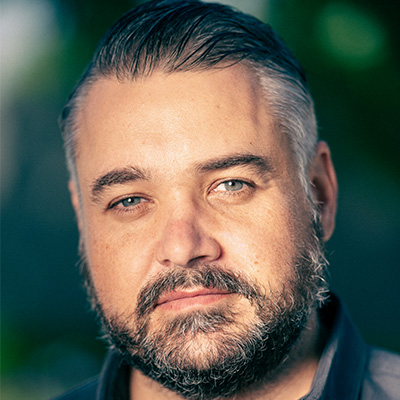
I’ve got Mr. Alan Versteeg coming on. Alan is the Chief Revenue Officer for a company called Growth Matters International. They work specifically with sales managers. We’re going to talk in-depth about human-to-human connection, that despite technology and what technology’s doing, there will be no replacement for sales professionals who are in the mode of human-to-human connection, and how to use technology as a tool to further that process for you.
We’re also going to talk about human psychology as it relates to sales and the mindset around that. We’re going to dip into some sales management, sales managers-type processes, and some really cool stuff in this episode. We’re going to go talk to Alan in a second. If you want to consider doubling your sales or your commission revenue, check us out. Send an email to YouMatter@CEOSalesStrategies.com. Put in the title Double My Sales. We’ll connect and we can show you what we got. It’s cool. It’s based on mathematics and it works. Without further ado, let’s go speak with Alan.
‐‐‐
Alan, welcome to the show. Thanks so much for being here. I appreciate the fact that you’re here. You look like you’re going to bring your A-game. That’s awesome. Thanks.
Thanks for having me. I’ll bring my A-game and share what I can with your audience.
Why don’t you tell people what you do and where it all came from? We’ll set the frame for this.
Meet Alan Versteeg
I started my career as an electronic engineer. Coming from Dutch Heritage, that’s what you do. You become an engineer, although it wasn’t my dad’s influence, and unfortunately, I lost him when I was young. I was twelve. Air Wolf, Knight Rider, and MacGyver, I thought that’s what I was going to become. I went into electronic engineering.
Long story short, I read a book called You’re Born An Original, Don’t Die A Copy by John Mason. If you’re not a reader, it’s a great book because every chapter is one page. It always feels like there’s progress. One thing he said was, “If you passionately hate what you’re doing for more than two weeks, stop. You don’t live once. You die once. You need to live with passion.”
I got out of engineering. I didn’t know exactly what I was going to do. A friend recommended I go into sales. I thought, “This might be more of what I enjoy,” because I wasn’t enjoying working with machines. I went into sales but got fired from my first four sales jobs. It was frustrating because, one, my family was very proud that I was an engineer. I then got into sales and I was really useless.
I did everything they told me to do. They said it was not my product. I got a 100% for my product knowledge test. I was the world’s best talking brochure. They then said I was not motivated enough, so I became the world’s most excited talking brochure. Long story short, I couldn’t succeed. As an engineer, we believe in cause and effect. We really studied that. I couldn’t think about what was not gelling.
Sales As A Profession
In an interview for my fifth hire, it was with a manager. He said to me, “Is sales a job or a profession?” I knew the right onset was an interview. I said, “It’s a profession.” He said, “How hard have you studied for this profession?” The penny drops. He said, “Sales is the world’s worst paying lazy job and the world’s best paying hardworking job as long as you treat it as a profession. Like lawyers and doctors are always practicing, sales is a practice. It’s a lifelong learning. If you decide to make this your profession, I’ll employ you and help you succeed.”
Sales is the world's worst-paying lazy job, but it's the world's best-paying hardworking job as long as you treat it as a profession. Share on XThat was the start of my sales career. I did well in sales thereafter. I saw the influence of sales managers. I started a company called Growth Matters. We focus on that sales management layer because most companies take their top-performing salespeople and remote them into sales and no system in place to set them up for success. That’s the shortest version I can give you of that story.
There is so much to unpack there. I love this. Sales is the worst-paying lazy job and the best-paying hardworking job. We all know that commissioned salespeople can make more money than any other profession on the planet. I like the fact that your mentor calls you out on it and says, “Are you studying or are you not? Are you building a profession or are you here for a job?” I love that because so many people in sales don’t commit to the discipline of becoming that person that is a profession.
It’s like in every other discipline. If you’re going to be a physician, you’re going to commit to the discipline. You’re going to study for 8 to 12 years before you even get out there. With an accountant or CPA, it is the same thing. We can take any profession for the most part. Even if you’re going to be somebody who’s involved in AI, you have to study AI. You’re going to study engineering. You went to school for engineering. There’s a cause and effect. That’s what he was saying to you. He was like, “The cause of the challenge is this. If you’re going to be that, then you’ll have the world’s worst-paying job because that’s the effect. The cause is if you study, you’ll have the best-paying job out there.”
That’s exactly it. Also, the best-paying profession. If we talk about physicians, doctors, and lawyers, sales professionals can be pretty much set for life by the time those professions come out of their education. He said, “Because the world doesn’t treat this like a profession doesn’t mean it isn’t. Educate yourself all the time.”
He gave me one last piece of advice that was so key. I said to him, “What should I read?” I was expecting Tom Hopkins or something that was going to get me going. He said, “Those books are great, but study the human. Study psychology. Understand how the brain works. Understand how people relate with each other because this is always going to be a human-to-human profession.” Those small pieces of advice changed the trajectory of my life. I’m sure if I got fired from my fifth sales job, I would’ve gone back to engineering.

I’ve been fired from jobs before. It wasn’t for performance but because I have a big mouth and I won’t shut up.
It’s the time we make you available to the market because your mouth is writing checks your body can’t cash.
I got fired from a job one time because the CEO asked me what I thought of this new sales plan. I said, “It’s the stupidest thing I’ve ever heard in my life, and here’s why.” He went ahead with it anyway and tanked the company. I told him, “You’re going to lose this much money. In three weeks, we’re going to be down this much in revenue.” He said, “I’m the CEO. You’re the sales guy.” I said, “Here’s the logic behind it.” When it tanked, they fired the whole team. They said, “It’s the team.”
I love what you said because, in all these other professions, you can make so much more money. I remember one time my wife at the time had her MBA and she was working in a corporate job. I took a sales job and I was tripling her income in the first year. It caused relationship challenges. She was very upset with me. I was like, “I’m making this for you and for me.” She was like, “I went to school for all these years.”
To your point, it is a profession. This profession is always going to have some new level of study. Your mentor recommended human psychology. Even with AI and all the things that are going on despite those technological things that are happening where people go, “These are going to be more challenges,” there’s no replacement for human-to-human interaction. I don’t think there ever will no matter how good AI gets. Correct me if I’m wrong. Certainly, there are thousands of years of encoded interaction and DNA history that human beings love to connect with other human beings. I don’t think that’s ever going to go away no matter how good we get with technology. What do you think?
That’s exactly it. There’s a DNA component. Also, there’s a neurochemical component. The challenge with generative AI language is it can start to make sense. It can start to converse. It can feel like a relationship at a communication level. What it’s not picking up is the neuroscience level or the chemical transactions that take place in all of those other areas. A lot of the trust is based on that.
We can’t tell the future, but my view is that the starting point is we get too binary. People go, “This is going to kill sales,” or, “This is never going to be part of sales.” I go, “He has a new admin partner,” and then I go, “He has a new thought partner.” I highly leverage AI, but it’s a thought partner. It doesn’t replace what I need to do.
I feel what’s going to happen is because of the power of AI to generate communication, everyone’s going to sound like they’re a sales and marketing expert in an email. They sound like an expert in a text. When we engage with people, we read intention. The brain, the biological center of defense, is looking for trust in things we can’t necessarily communicate. People are going to become more skeptical.
Already, I’m seeing it on LinkedIn. Sales professionals are doing massive damage to the brand of the sales profession with sentences that seem to make sense but there’s no substance behind it. It is the substance that makes people connect. If you meet someone and they are somewhat shallow, you don’t connect because there’s a substance you’re looking for. Sales is the trust of that substance or that value system that you’ve got my best interest at heart.
I haven’t coined this yet, but I want to call it the beautiful lobby. This happened to me. I walked into this restaurant and the lobby was spectacular. I walked in and continued into the restaurant. When I went into the restaurant, there was trash on the floor. It didn’t feel right. There was this eerie feeling. I walked over toward the salad bar and I looked down on the napkins and there was a spider crawling across the napkin. I was like, “I’m out of here.”
To me, that’s analogous to when you get a perfect email written out of AI but then when you’re talking with the person, immediately, there’s a broken rapport. The trust, like, and respect drop immediately because it’s like that guy who walks up to a girl in the bar and has that lounge lizard line. It completely drops trust. Human beings don’t realize how important it is until they get rejected. They think, “I’m special.” You are special. We are special, but if we can’t communicate with the other person on the level that they want to be communicated with, then no matter how good our content is, at the time of the meeting, it all falls apart.
I was talking to a friend of mine who buys certified public accountant practices. That’s his business. Somebody was asking him, “What do you think about AI and CPAs? Are there going to be any accounting practices left?” I was thinking about that and was like, “I don’t want machine language or AI language doing my taxes without talking to a human being.” If I’m hearing you correctly, this is exactly what we’re trying to get people to understand. This will never go away. The people who get more professional at the profession are going to rise above the average. There’s always going to be a place for those people.
It’s exactly that. It’s a step further. We are going to leverage the assets better than others because we treat this as a profession. If I’m in dentistry and I’m buying their technology and it takes a whole bunch of things out of my practice but improves my delivery, that makes me better at my profession and the people coming in have a better experience. I can leverage their technology.
I get frustrated that we’re trying to ban this in schools like it’s not going to be here for the coming future. Isn’t it a school’s job to prepare us for the world? Getting off my soapbox about education, I’ll give you a practical example. We’ve signed with a partner for travel. They’ve sold me this wonderful pitch. It makes sense and it takes everything off my plate. I said to them, “Send me four options. Let me make a decision.” They sent me these four options and what feels like a 72-page email. It’s all the details, every flight, and every layover. I’m going, “Where does this help my life?”
I saved that email and dropped it in GPT. I said, “GPT, please summarize this for me. Tell me what’s the shortest flight, what’s the layover, and what you recommend.” It comes back, summarizes it in one table, and gives me a recommendation of number 1 and number 3 and why not 2 and 4. I sent it to the agent and said, “There’s my recommendation.” I want to ask you something. Why aren’t they doing that? It’s an asset.
This is what professionals do. Professionals are looking for the edge, not for the shortcut. I’m going to repeat that because that’s the difference. I’m using LinkedIn as an edge, not a shortcut. I’m using AI as an edge, not a shortcut. I’m using my CRM as an edge, not a shortcut. Many people who treat sales as a job are looking for a shortcut to make big money.
Professionals are looking for the edge, not for the shortcut. Share on XYou make big money because of the value you take into the market. To take value to the market, you have to be a professional. To be a professional, you want to use every tool at your disposal to get an edge, not a shortcut. Many people are going to abuse AI and damage the profession of sales. The professionals keep making more money because we are operating as a profession, not as a, “This is a job I want to make some cash before I do something I really like.” I’m sorry. I know that sounds very judgmental. It wasn’t meant to. That’s my view.
It was highly brilliant and eloquently stated. I wrote it down. Professionals look for the edge, not the shortcut. I was like, “That is a message that people need to know.” You’re so right. A lot of people selling are looking for shortcuts. They’re like, “I’m going to blast out 10,000 emails a week and I’ll get somebody who says yes.” In the meantime, they’ve pissed off all these people and they have potentially created spam, blacklisting IP challenges for themselves, etc. That’s taking a shortcut.
By using the power of email marketing as an edge and going out with personalized, meaningful, and relevant communication that helps other people, even if they sent out 100 messages and got 50% of them to respond back and 50% turned into appointments versus sending 10,000 and getting the same amount of appointments or less, that’s an edge because it’s far less work and far clearer.
I want people to understand what you said. When you said it, the light switch went on. It was like, “Wow.” People in the selling profession, especially managers because managers sometimes don’t pay attention to this, should be looking for the edge consistently, going for professional brilliance, and showcasing that. Between you and me here, if we’re able to get that professional edge and showcase that, does that immediately differentiate us from our competitors?
Immediately and profoundly. It is more important than the product, more important than the price, more important than the brand, more important than the solution. Effectively, how we sell is the differentiator. It is not what we sell, who we sell it for, or the price we sell. It is how we sell, and how we sell is not a methodology. It’s a primary mindset.
The reason professionals look for an edge is because we have a mindset that we have a profession. What hackers will do is they’ll go, “I’m going to use AI as my edge.” What’s your baseline? For my baseline, I’ll give you an example. My morning self-talk is, “It would be negligent for me to deny the world the value I have to give. I’m going to push through the difficult cold conversations to make sure I get the market the value it needs.” That frame of reference says I have a noble purpose here that is greater than rejection, but that doesn’t mean I go and phone 100 people and hope that 1 bites. Even a blind squirrel finds a nut. It’s not what you do.
You touched on something that’s close to my heart. Managers then perpetuate the problem. It’s like, “You made 2 sales out of 20. I need four sales. Go speak to 40 people.” What you’re saying is, “You suck. Why don’t you go suck in front of more customers? Why don’t you damage our brand, damage the profession of sales, and damage what’s happening?”
I’ll talk about the edge, and I’ll be very practical here. You go through the acronym R equals SNAP, which is the Results of the outcome of our skills multiplied by the Number of times we practice those skills, multiplied by where we Allocate those skills or where we allocate our efforts, and then multiplied by the Process where the buyer is in their journey. You’ve got to fish where the fish are in the right season with a noble intent, a good skill. You get a 1% improvement in all those areas and you start elevating. You get another 1% and you start elevating.
Those edges are the difference but their intention is not short-term. Their intention is, “How does this advance my professional selling?” I leverage AI, technology, video marketing, and LinkedIn, but it’s easy to get into abuse. I’m going through a cycle where we’ve got an organization doing outreach for me. I’ve called them three times saying, “This is not my voice. This is not authentic. You’re damaging my brand.” Everyone’s going to realize that when it’s a profession, it’s your brand. It’s not the brand of my company. It’s what I stand for as a sales professional.
Why Mindset Matters To Success
No matter whether we’re working for a company or not, we all have a personal brand that is left with the people that we’re interacting with one way or another. I love what you are saying here. We’re going to talk about managers in a moment because that’s another thing that’s dear and near to my heart. I keep hearing the word mindset coming up over and over again in our conversation.
I’m a big proponent of the idea that you are your own business. The difference between whether you make it in the business is whether you’re looking and building your own internal mindset on a consistent basis as well as your business skills. Some people don’t like that. Most people embrace it. The reality is I’ve found that to be a success factor. This is a really important question and you’re the guy to answer it. If we took 100% of success, what percentage of success is that mindset in that process? A range, if you will.
I’ll give you a number. I’m going to have to expand it a bit. It’s 90% of what it is. The challenge with mindset is that it’s not just about having a positive mindset, but it’s also about our past experiences, the meaning we give to things, the story we tell ourselves, the frame of reference, and how we see the world. We don’t see the world as it is. We see it as we are. Mindset is something you’ve got to be cultivating all the time.
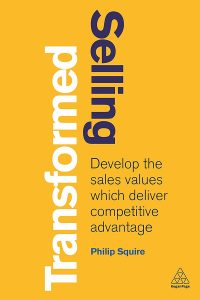
There is a group of work done by Philip Squire. He wrote a book called Selling Transformed. He runs an organization called Consalia. When they go to buyers and say, “Why didn’t you buy?” It’s not the price, product, or solution. It’s not that the salesperson didn’t have good communication skills. It’s values. They didn’t seem authentic. They didn’t seem to have my interest at heart. They always speak about values, and values shape our mindset.
When I sell with a noble purpose, I don’t have to worry about my body language. I don’t have to worry about my tonality. I don’t have to manufacture a shortcut or a hack to get somewhere. I sharpen it all the time. Mindset is so critical. That’s why I study psychology. We assume the world as we see it. If I think that every customer buys on price and you send me to the world’s best value-based selling program, and I go to my first customer and they’re saying, “Can you guys sharpen the pencil?” I’ll be like, “Yeah.” I don’t see if everyone buys on price. I’m always going to be loyal to my mindset. I’m always going to be loyal to my narrative.
That’s why when I use a simple difference like a profession, that day, I show up differently. The same guy, the same skillset, and the same IQ but I show up differently. This is the thing I want to add because we forget this. If you fire your accountant, how many people lose their jobs in a business? Nobody. Every salesperson on average covers 7 to 12 salaries in an organization. Why are we acting like that doesn’t matter? Why are you only worried about your own pocket? You are an entrepreneur the day you decide to become a salesperson. If you don’t generate revenue, people lose jobs. When you have that mission, things change. You show up differently because it’s a profession.
Always loyal to our mindset. People, please write that one down because it’s so true. I had a conversation like this. The gentleman is basing it all on price. Everything is on price. He is in the construction field. They’re selling construction-type products like roofs, solar, and other things. He was telling me this line and that line. Everything was about price.
I said, “You’ve got the business return on investment down. Where’s the personal return on investment? Both categories are taken into consideration when they make a sale.” He said to me, “What do you mean?” I said, “People buy on emotion. That’s the old logic. They justify with logic, but the reality is that logic is then justified with another emotion. You’ve got two emotions going on there. Business return on investment and personal return on investment.”
What I’m hearing is if they’re all always loyal to price, let’s say in that case, then no matter what you bring into that conversation, they go back to the default, which is, “I’m going to sell on price.” That in itself deflates value right then and there. It’s hard to compete against Walmart or any store that’s doing that.
I have a question. I’ve been in management positions in sales and have worked with lots of sales managers. I know you specialize in this. When it comes to managers, I have seen that they tried to do what I call buyer’s bias. They try to manage through their own ability that they like to sell so they want the rest of the team to sell like that. Do you see that as something that happens regularly or is it the people that I’ve run across?
Sales Managers
It’s a regular occurrence, and I’ll tell you why. It’s not anyone’s fault per se. It’s a blind spot. We take top-performing salespeople and promote them into sales management. We end up with a mediocre sales manager and lose a really good sales professional. The part of the challenge is cultural. We’ve been told we have to strive for a promotion and generally, as a sales manager, you’re going to make less money and have more stress. That’s pretty much the default. The only win of sales management is when you have a higher purpose, which is to unlock human potential. As a sales manager, you can change the family trees of the people you manage. Glen changed it for me. I wouldn’t be who I am now if it wasn’t for those insights from Glen, my mentor.
The next part is we put them in this job but we don’t prepare them. We know this. The best chef doesn’t run the best restaurant. The best hairdresser doesn’t run the best salon. The best football player isn’t necessarily the best football coach. When we get into the field, all we know is what we have. We teach our logic. I call it logic vomiting. We tell them, “You should do this. You must be central to the customer. I don’t know why my team doesn’t get that. Let me show them how.” What they don’t realize is you’re externalizing your identity and your values and you’re not coaching those. You’re telling behaviors. Coach the values. Coach the understanding.
The organization is only focused on the number. It’s like, “What’s your quota?” “We are customer-centric,” is what they’re telling the market but then they tell me, “Are you going to commit to this deal this quarter, please?” I say, “Boss, there’s no way this guy is buying.” They’re like, “Please, I need it.” I’ll be like, “Okay.” It misses and then they’re like, “Why did you commit that deal?” I’m like, “You told me to.” There’s a level of pressure that we are losing the professional part.
The reason managers are so critical is they broaden a space where all they know is to show people how to do it. They show harder, try harder, and get frustrated. What they don’t realize is that the job changes from, “Get the number for your target,” to, “Get the number through your people.” It’s the through your people part where the development void is.
He has the last part. They get put behind the mouse of a dashboard of a CRM system and they think somehow, the feeling of control that gives them is going to change human behavior. They do the things that make them feel like they’re in control at the cost of things that give them control, which is coaching their frontline people.
The interesting part is when we have run profiles on top performers who are solo out there, doing the deal, and knocking it out of the park on quotas, the managers are very different profiles. A salesperson does not like to do spreadsheets and things like that. They’re not like that. A manager likes to do these types of number crunching and things like that. It’s a profile of that person.
I love what you said. When you take somebody and promote them because it’s a classic path, it’s a mistake in most cases because we’re taking somebody really great out of the field and putting them into a position. The dream is, “I have control and I’m going to make more money.” The reality is that sales managers usually make less money. I remember in one job one time, I was the top guy in this company. The owner of the company came to me and said, “You’re making more money than I am. I have to do something about this.” I was laughing. I was like, “Okay.”
What he should have done was give you a trophy.
The manager was not happy with me because I was making more money than the owner. What I’m hearing you say is a manager’s job is to increase revenue through the people that they are managing and a salesperson’s job is to increase revenue through what they are managing.
Exactly. The job of a sales manager is not to grow sales. It is to grow salespeople who grow sales. That’s the fundamental shift. Many companies put pressure on the sales manager to get the number. They give them a target or quota as well. They make a sales manager an individual contributor. All the data and research is completely flawed.

There are fundamentally different mindsets that require different perspectives on the world. A level of maturity that I’ve shifted to is that it’s not just about the money, but it might be about a longer-term career. Going through sales up the ranks is a great way to the C-Suite in many businesses if you do well, but you have to know that during that journey, you only get promoted when you’re helping others grow.
That’s the key piece. If all it requires is talking about a spreadsheet, a pipeline, and data, then what happened to the pre-CRM frontline managers who were on the road with us, were having coffee with us at coffee shops, were meeting us for lunch, and were coaching us in the field? That’s been ripped out. That whole layer is gone.
We’re sitting in a space where people are going, “Why can’t salespeople sell?” I’m like, “The majority of them have been taking orders for seven years while the tech boom happened or for X amount of years while this boom happened, but the guy that’s got to go sell construction in a tough industry has got to sell. He’s got to differentiate. He’s got to negotiate.” Those skills are often missing. I’m not undermining those who have done well in the tech space. I’m saying even in that space, when you look at the fundamental shift between the top performer and the next layer, it’s the mindset of a professional versus the mindset of someone who has a job.
If you’re making more than your boss and more than the CEO, you are employing more people. Does no one get that that’s the job of sales? We are there to create revenue that makes a business work. Peter Drucker said, “The only reason a business exists is to sell something.” When you have companies that value that where the CEOs treat the salespeople as their upper echelon and they hold the standard of professionalism, the rest takes care of itself most of the time.
The reality is that sales is supporting operations. They’re supporting human resources. They’re supporting every non-selling position within the company. I wanted to ask you one final question on this because I wanted to get your feedback on this. I view customer service as it should also be a selling entity. Do you see the same or do you disagree with that? I’m okay either way. We’ve never talked about this but I want to get your feedback.
Customer Service
Yeah. I’m always comfortable to debate but I’m not going to debate on this. I’m going to give you a framework or a frame of reference. Everything we do in the business is to close the gap between what a customer expects and what they experience. The expectation is set by what we sell and what we say in marketing, and the experience is based on how we deliver that.
Everything we do in business is to close the gap between what a customer expects and what they experience. Share on XIn organizations where they separate out the functions of service and sales under different leaders, you will find friction, lack of collaboration, and frustration in your customers. When you bring those under the same title with one thing in mind, everybody plays a role in closing the gap between what customers expect and what they experience.
We realize that service is the next sale. Don’t come speak to me about generative AI when my projector doesn’t work every time I try to run training. Get your delivery right. You are part of the next sale. This is the one difference. This is a tough, good-paying profession. My integrity is all by other people’s behavior. When I go forward as a salesperson, I am representing your capability.
If I can’t go to my leader and say, “Boss, we can’t keep dropping like this,” and get service aligned, it will be flawed. My biggest frustration with service is when they say, “It’s your customer.” It’s only my customer. It’s not the business. They forget, and I say this respectfully, that there’s a person there that pays their salary. I don’t say that as an ego thing. I’m saying that as a noble thing. Understand I don’t need it without the sale.
We’ve had a couple of big sales this 2024. Guess what? I’m employing lots of people to fill up their support structure. I wouldn’t need them without the sales. Without those deals that I brought in, I wouldn’t need them. I need them because they have to absorb the growth I’ve created. That’s wonderful. The job of sales is to drown operations, but the job of operations is to always make sales look like the integrity is intact.
Identifying Sales Focus
You brought up a point that I would like to reinforce for people. I’m okay with you disagreeing with me. When I work with people and work with companies, I’m teaching them, “No matter what your product or services that you deliver, you are a sales entity first. You must think like a sales entity for your product or service because your product or service is what you deliver. You can’t deliver it unless you sell it. You can’t employ people unless you sell it.”
My question to you is, should people be focused far more on sales and worry about deliverable mechanisms on the backend and things like that after they sell the product or service? I see too many people staying in creation mode and trying to prop up operational support, IT support, or whatever and their profitability is awful on the thing. Should we go out and sell another $1 million and then go, “We’ll delay the delivery of that. We’ll figure it out better. We’ll backfill people.” What’s the better route from your perspective to do?
I’ll give you my perspective. I’ll give you my personal experience but I’m going to start with a lens. If I was a venture capitalist, who would I invest in? I’m not sure I would invest in the company and help them prop up their operations more in the hope of a sale. It’s like the dog that chases the bus. Once it catches it, what does it do with it? You’re going to get investors. Some of the answer lies in that perspective.
My view is mature pipeline management is the way you get that balance right. We are not treating pipelines as a critical part of our profession. Salespeople are not updating the CRM. They’re not making sure the data is sanitized and not honoring their pipeline, and then they’re the first ones to complain when we have a delivery glitch.
Understand that the business leader can’t determine the demand unless we’re real about the demand. Also, they can’t take the risk of propping up with seventeen new technical specialists because you feel good about the deal. The quality of the rigor by which we manage our big deals, the ones that sway the organization, the rigor by which we analyze our pipeline, and the rigor by which we analyze the client and get mutual agreement are so critical. Otherwise, you are biting too soon.
Don’t get me wrong. We’re in a growth cycle where we’ve got a lot of commitment and we’ve got some POs. I’m scaling for where we’re going. We’re going to where the puck is going. That might not be the wisest decision, but the qualification of my deals is strong. I’m in robust control. If I lose 1 or 2 of them, that’s okay, but if I win all of them, then my integrity is going to go, “I’ve got to scale for this.”
The problem is waiting for you to feel safe enough to sell something. You will never sell it. The job of sales is to drown operations. The job of operations is to catch up as quickly as they can. My view, and I’m not saying it’s your view so you can disagree, is that saving for the win is stupid when you should be going out there and winning. You’ve been there. There’s nothing like momentum. Once you start running that momentum, then you are in this brand and then you are in this logo.
Don’t get me wrong. It’s painful because you have to break your entire business model. Everything changes in growth. For the CEOs listening to this, we know that pain. It’s the way you balance that risk as best possible. Manage your pipeline properly. Don’t talk about it. What are the deals at risk? How do I manage the deal? What’s happening? I am not forcing you to tell me whether it’s going to land or it’s not going to land. I’ve seen companies collapse on both ends of that scale, losing a big client because they weren’t in control and were over-resourced or winning a big client because they’re in control but losing it in the first three months because they’ve damaged their reputation. I hope that helps. That’s my view.
I like it and I like the even when we’re not ready type mode because we’re selling something and moving forward with it. I’ve always found that sales can create some challenges but having the finance behind us or in our bank account at that point is a lot easier to deal with than not having the finance in our bank account. I appreciate the conversation.
There is something I want to add there. Don’t sell what you don’t have. That’s not what I’m saying.
That’s unethical. I agree.
Sell where you’re going. Don’t sell what you don’t have to get a number.

I agree with that. Is there anything that maybe you were like, “I wish Doug had asked me this question”?
Not at all, but if I were to say anything to any sales professionals, something I read that really resonated with me was when you understand that selling won’t help but helping will sell, the way you prepare for every conversation changes. That’s what happens. People buy your intention to help them address a business issue, overcome a challenge, drive an outcome, or address a need.
To your starting point, that second emotional part of the sales sandwich, the emotional logic, is, “Can someone hold my hand and let me know I’m making the right decision?” They’re looking for someone who’s sharing this decision with them. We often forget that there’s always that last part of risk. Even with all the logic and emotion, there is, “Is this person in it with me?” To wrap up where you started, they feel that from the 1st or 2nd conversation.
Without question.
That’s where it starts. It doesn’t start with some closing technique.
I was the top rep in a company that had over 300 salespeople. People were asking me how I was selling so much. I said, “Rapport.” They were like, “What are you talking about?” It’s exactly what you’re talking about. They want to know you’re holding their hand and they want to know that you are vested in that outcome. If you do that, anybody will sell more than they would without it. It’s like, “Mommy and Daddy, I’m afraid. Hold my hand.” When you hold the child’s hand, it’s like, “It’s okay, sweetheart. We’re walking this way. We’re going together.” The child feels safe. I don’t think we ever get rid of that as we become bigger-bodied children as we go along. That’s my feedback.
The stakes go up. You punchlined your own story again. What you said was your success was not methodology or technology. It was a mindset that you are operating from, which was, “If I show a vested interest in what they’re trying to do, I will be their safe place.” The rest comes along with it.
You can be a decent closer or a decent salesperson, but I found with that vested mindset that you’re speaking of, that’s way better than the master closer. You’ll outsell the master closer every single time and generate way more leads because you’ll get more referrals and equality.
You’ll build a career, not a quota.
Connect With Alan Versteeg
How do people know more about you? I’m sure they’ve taken copious notes. The reality is that there is a lot of great information here. I’m sure people have been thinking. Some of them might have pulled over to the side of the road and they’re crying a little bit, which is good too, knowing that they’ve got to make an adjustment and a change. If they want to know more about your company, where do they go?
Luckily, I’ve got a fairly unique surname. You type in Alan Versteeg and pretty much, you’ll find anything about me. Where I post most is on LinkedIn. That’s where my content is. That’s where I comment and share my opinion of the world. The company is Growth Matters International. Drop my name on LinkedIn. That’ll be the primary point of entry for anything you need, anything else I’ve spoken about, and any other things that I share online.
I would highly recommend that you check out Alan and check out what he’s doing. This is so important to your success going forward. Managers and CEOs, check it out. This was spot on. I love what we were talking about. Thank you very much for being here on the show.
Thanks. It was great.
‐‐‐
There are so many notes I have here. I hope you have a ton of notes. I wrote cause and effect, sales being the worst-paying lazy job if you’re lazy at it, and if you are a professional and really doing what a profession requires to constantly get better, it is the highest-paying profession on the planet in which we live. I love the fact that we had professionals look for the edge, not the shortcut. That edge is to help everybody in a win-win play. It’s to help everyone get better. There is more leverage for you when you are playing and looking for the edge versus the shortcut.
Here’s the bottom line. Your mindset will drive your behavior and your behavior will drive your actions. You could also look at it another way. Your mindset will drive your actions, which will drive your behavior. We are always loyal to that mindset that we see ourselves, and we value what we see in ourselves. Remember this when you’re selling to others because the people you’re selling to also value what they see. That’s that personal ROI we’re talking about on the episode here.
If you’re only selling to the business return on investment, you’re missing a huge percentage of the sales process. You’re only going to pick up so many sales that way. You can sell to the personal ROI, justify with the business ROI, and then wrap around the whole emotion attached to both of those. That’s a very strong sale but it has to come from their perspective, not yours. You are the facilitator. As long as you’re helping people, not manipulating them, so that they win and you win, that’s the strongest sale in the world. You’ll get tons of referrals this way. You work easier, you are short of sales cycles, and those close rates are going higher when you do this.
I hope you enjoyed this episode with Alan. If you did, I’m going to ask you to please give it a review. I know it takes a few minutes. It helps us. I’ll be forever grateful. If you want to predictably and reliably increase or even double your sales or your sales commissions whether you own the company, a solo person selling for the company, or an agent for an external company, check us out. You can get more information on CEOSalesStrategies.com. If you want to send an email, send it to YouMatter@CEOSalesStrategies.com because you do matter to us at CEOSalesStrategies.com. We will respond to you and give you more information.
With that being said, go out and sell something. Play win-win. Don’t discount when you don’t have to because you’ve got to make up for those discounts. Sometimes, you have to sell a lot to make up for those discounts. Do what Alan said. What I’m always saying is to develop the mindset of helping people. When you do that, you’ll know when to disqualify and walk away from the sale. You won’t make that mistake of selling someone that you shouldn’t have sold in the first place. To your success.
Important Links

