Media Library

Proven strategies for finding hidden profit, building high-performance sales teams, and driving profitable growth

Podcasts, Articles & Interviews

Explore ([total_posts]) pieces of content
[clickable_slug]
Revenue stalls rarely happen because CEOs stop pushing. They happen when the market, buyer, messaging, and sales process are moving in different directions. Many companies increase activity when growth slows, but more effort does not create predictable revenue when the go-to-market foundation is unclear. The result is wasted sales capacity, longer cycles, unreliable forecasts, and pressure on EBITDA performance. The challenge is identifying whether the issue is execution, positioning, process, or a deeper disconnect with the economic buyer before more capital and time are committed. Mike Brunnick shares why impatience can become one of the most expensive mistakes in revenue growth.
[clickable_slug]
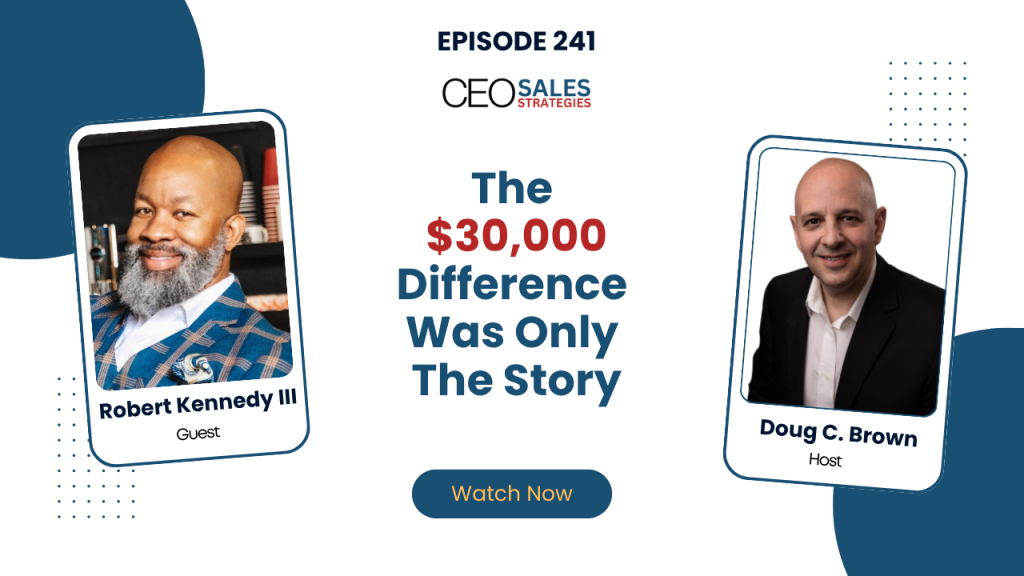
Many sales organizations unknowingly reward behaviors that increase activity while weakening margins. Customer segmentation becomes unclear. Pricing drifts toward competition instead of value. Sales teams become order takers instead of value creators. Compensation plans encourage outcomes that look productive but fail to maximize profit. Robert Kennedy III shares why storytelling isn't a marketing exercise. It's a business mechanism that influences trust, buying behavior, premium pricing, and how customers perceive value long before they make a purchasing decision. Eric Wiklendt from Speyside Equity spends his time evaluating and improving manufacturing and distribution businesses between $50M and $500M in revenue. His perspective comes from seeing how operations, pricing, customer economics, and compensation influence enterprise value long before most CEOs recognize the connection.
[clickable_slug]
Every sales process has a hidden narrative. Every proposal, case study, customer interaction, and buying decision is shaped by a story buyers are already telling themselves. The problem is most companies leave that narrative unmanaged and then wonder why deals stall, margins compress, and prospects compare them on price. Robert Kennedy III shares why storytelling isn't a marketing exercise. It's a business mechanism that influences trust, buying behavior, premium pricing, and how customers perceive value long before they make a purchasing decision.
[clickable_slug]
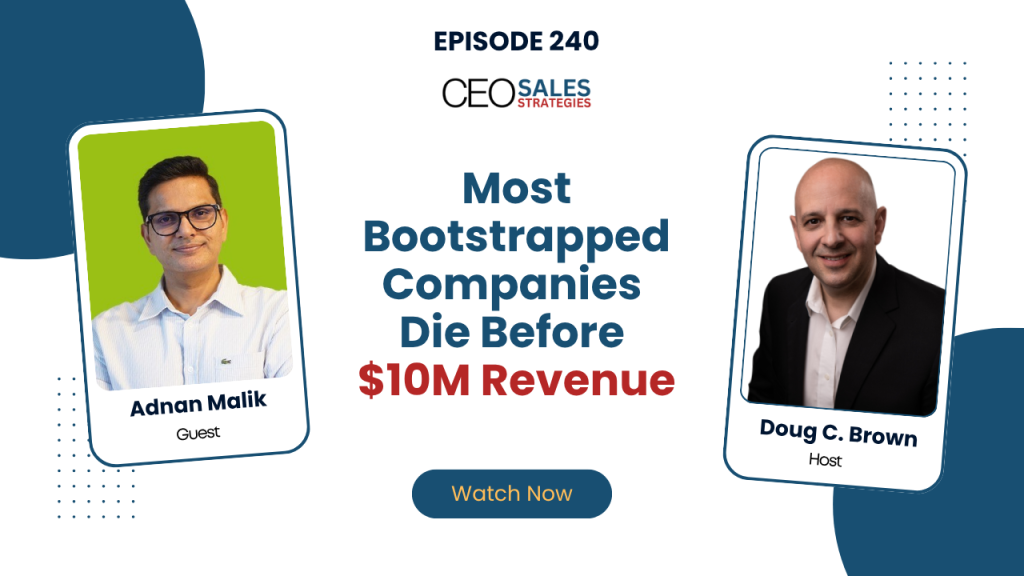
Most bootstrapped companies don’t fail because the idea was bad. They fail because cash leaves faster than validated demand comes in. Founders build too much before customers commit. They hire before process exists. They scale departments before operational discipline is strong enough to survive growth. What looks like momentum early quietly becomes reporting chaos, rising acquisition costs, weak retention, and eventually margin pressure. This conversation breaks down what sustained 100% year-over-year growth actually demanded inside a bootstrapped company: customer-first validation, ruthless spending discipline, operational process, and knowing exactly when systems start breaking under scale. Adnan Malik from Software Finder shares the operating decisions behind six consecutive years of 100%+ growth without outside funding — and why most founders wait too long to build the structure growth actually requires.
[clickable_slug]
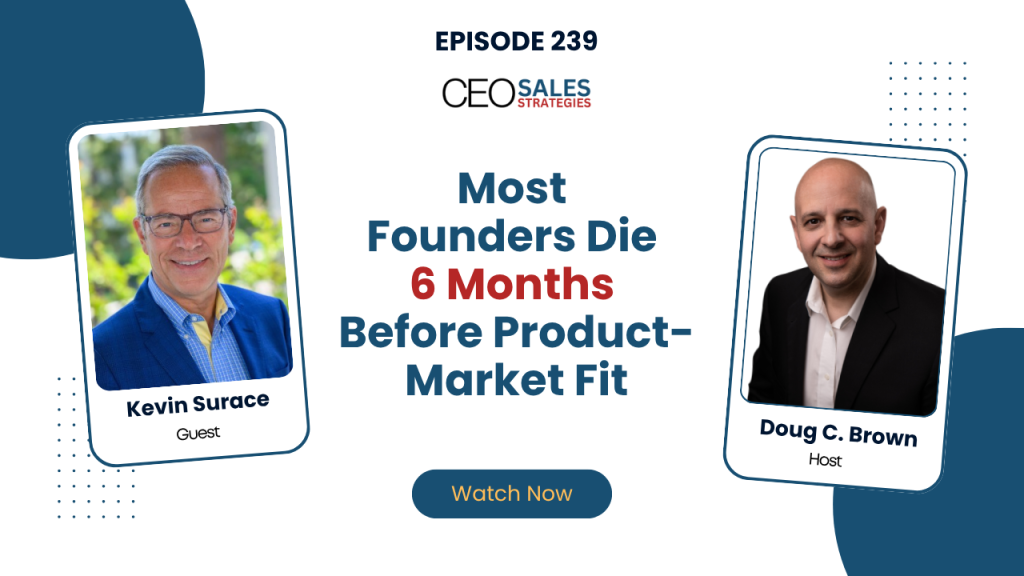
Most founders think hard work and persistence are enough to survive. They are not. Companies usually fail because the market arrives slower than expected while cash disappears faster than planned. That timing pressure becomes even more dangerous when leadership stays emotionally attached to outdated operating models, labor assumptions, or execution structures the market no longer rewards. AI is accelerating that shift across industries by compressing work that once required entire teams into tasks completed in minutes.
[clickable_slug]
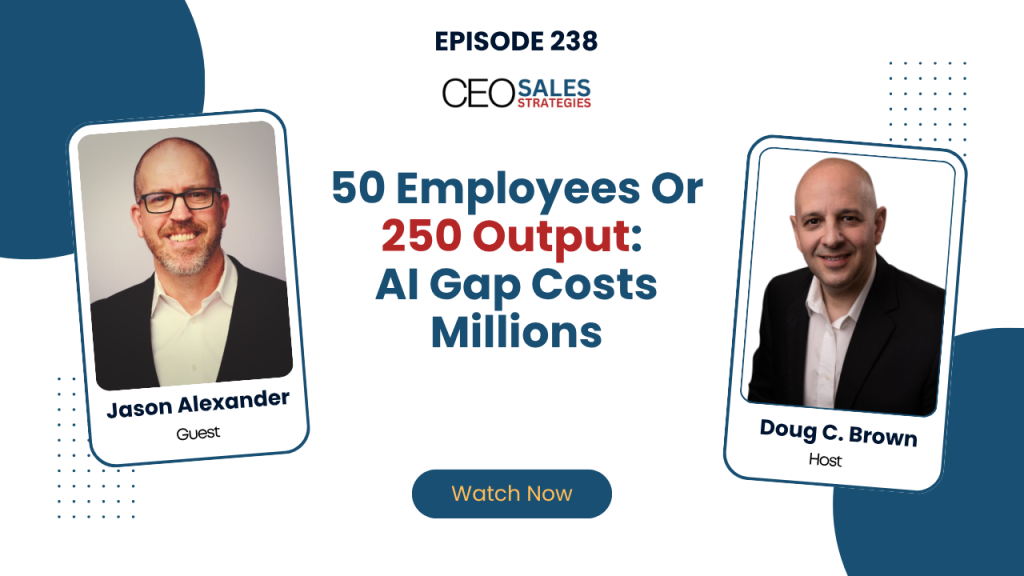
AI isn’t increasing productivity by default—it’s exposing where execution is already weak. In most companies, output inconsistency, slow response cycles, and low-converting proposals were already there. AI just scales it. The problem isn’t the tool. It’s deploying it without structure. Messaging fragments. Sales experience breaks. What feels like efficiency starts reducing trust and conversion across the pipeline. Meanwhile, competitors are using the same tools to standardize execution, increase output per employee, and move faster without adding cost. The gap compounds into longer sales cycles, lower close rates, and pressure on EBITDA.
[clickable_slug]
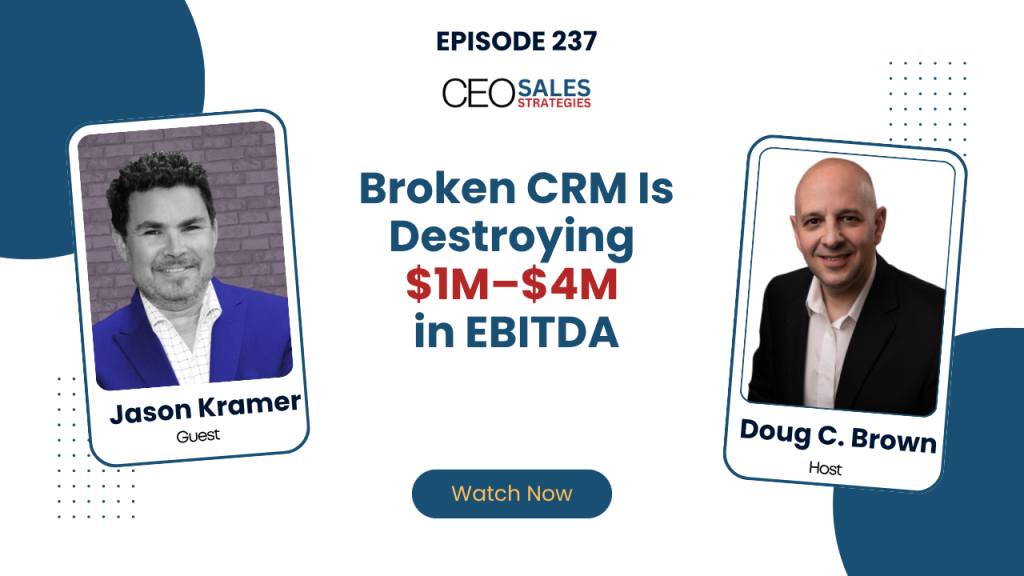
Most companies don’t lose revenue because of market conditions. They lose it because their process can’t hold onto the deals they already created. A 5% drop in follow-up doesn’t show up as a red flag—it shows up as slower growth, higher acquisition costs, and sales teams working harder to replace deals that were already in the pipeline. Over time, this compounds into missed revenue, wasted payroll, and EBITDA that never reaches its potential. The real issue isn’t lead generation. It’s what happens after the lead enters the system. Without enforced workflows, defined follow-up, and visibility into the pipeline, opportunities disappear—especially in longer sales cycles where timing quietly kills deals.
[clickable_slug]
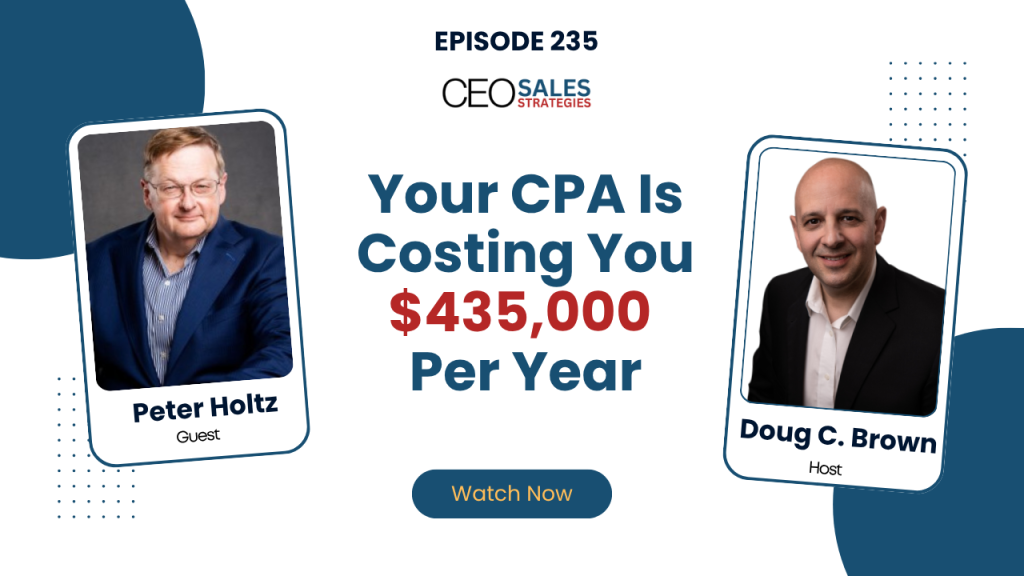
Most CEOs assume their taxes are optimized because they’re filed correctly. That assumption quietly drains cash from the business year after year. When tax is treated as compliance instead of structure, overpayments don’t show up as obvious errors. They show up as lower EBITDA, reduced reinvestment capacity, and decisions made with less capital than should be available. The real issue isn’t what’s on the return. It’s what never should have been paid in the first place. That gap compounds annually, and by the time it’s visible, it’s already embedded in the financials and reflected in how the business is valued.
[clickable_slug]
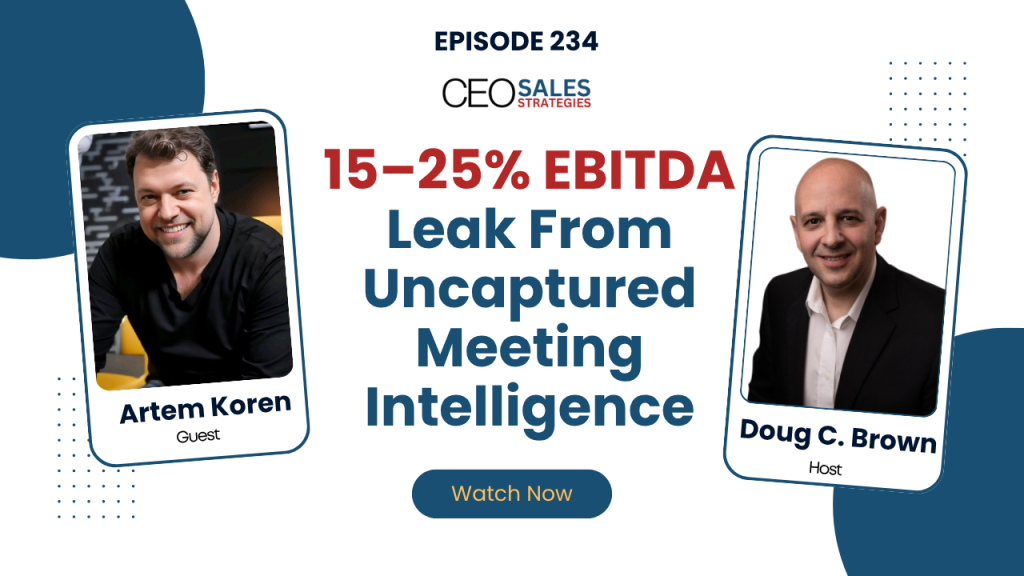
Most CEOs assume meetings are operational overhead, not a financial lever. What’s actually happening is your highest-value data is being created and then lost, fragmented, or trapped in individuals instead of systems. That loss shows up as slower execution, duplicated labor, and inconsistent customer outcomes—forcing buyers and investors to discount what looks like unstable performance. By the time you see it in EBITDA or valuation, the inefficiency isn’t visible—it’s embedded across how your business runs.
[clickable_slug]
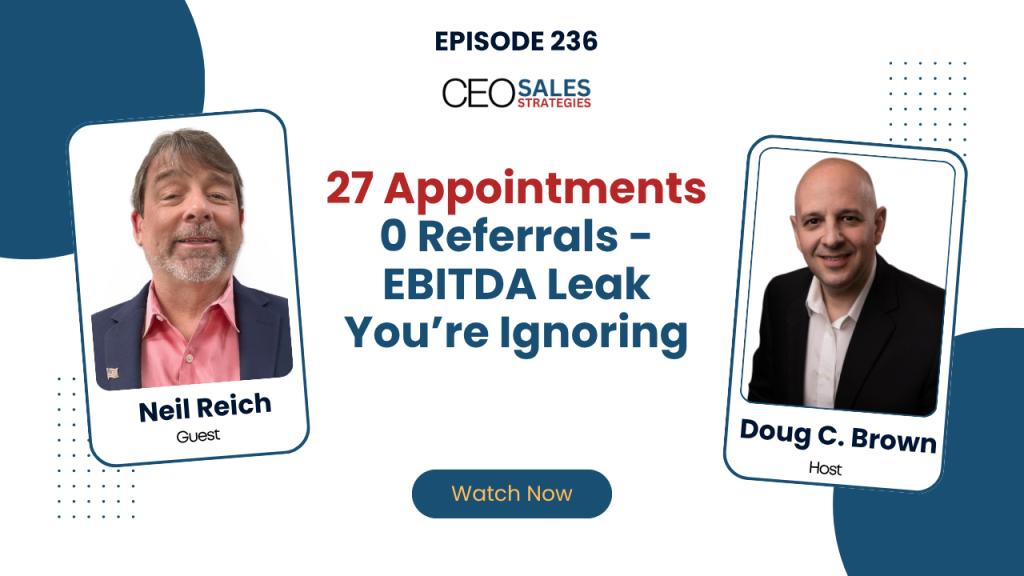
Your close rates aren’t stuck because of weak delivery—they’re capped by how your buyers see themselves in the deal. You can produce strong results, keep clients satisfied, and still get forced into price conversations, slow decisions, and low-leverage deals. When value isn’t experienced the way buyers define it, you don’t get premium positioning—you get tolerated. That gap shows up in conversion rates, referral quality, and how repeatable your revenue actually is. Over time, it trains your market to treat you like a vendor, not a strategic partner—and that pressure flows straight into EBITDA and valuation.
[clickable_slug]
Revenue stalls rarely happen because CEOs stop pushing. They happen when the market, buyer, messaging, and sales process are moving in different directions. Many companies increase activity when growth slows, but more effort does not create predictable revenue when the go-to-market foundation is unclear. The result is wasted sales capacity, longer cycles, unreliable forecasts, and pressure on EBITDA performance. The challenge is identifying whether the issue is execution, positioning, process, or a deeper disconnect with the economic buyer before more capital and time are committed. Mike Brunnick shares why impatience can become one of the most expensive mistakes in revenue growth.
[clickable_slug]
Many sales organizations unknowingly reward behaviors that increase activity while weakening margins. Customer segmentation becomes unclear. Pricing drifts toward competition instead of value. Sales teams become order takers instead of value creators. Compensation plans encourage outcomes that look productive but fail to maximize profit. Robert Kennedy III shares why storytelling isn't a marketing exercise. It's a business mechanism that influences trust, buying behavior, premium pricing, and how customers perceive value long before they make a purchasing decision. Eric Wiklendt from Speyside Equity spends his time evaluating and improving manufacturing and distribution businesses between $50M and $500M in revenue. His perspective comes from seeing how operations, pricing, customer economics, and compensation influence enterprise value long before most CEOs recognize the connection.
[clickable_slug]
Every sales process has a hidden narrative. Every proposal, case study, customer interaction, and buying decision is shaped by a story buyers are already telling themselves. The problem is most companies leave that narrative unmanaged and then wonder why deals stall, margins compress, and prospects compare them on price. Robert Kennedy III shares why storytelling isn't a marketing exercise. It's a business mechanism that influences trust, buying behavior, premium pricing, and how customers perceive value long before they make a purchasing decision.
[clickable_slug]
Most bootstrapped companies don’t fail because the idea was bad. They fail because cash leaves faster than validated demand comes in. Founders build too much before customers commit. They hire before process exists. They scale departments before operational discipline is strong enough to survive growth. What looks like momentum early quietly becomes reporting chaos, rising acquisition costs, weak retention, and eventually margin pressure. This conversation breaks down what sustained 100% year-over-year growth actually demanded inside a bootstrapped company: customer-first validation, ruthless spending discipline, operational process, and knowing exactly when systems start breaking under scale. Adnan Malik from Software Finder shares the operating decisions behind six consecutive years of 100%+ growth without outside funding — and why most founders wait too long to build the structure growth actually requires.
[clickable_slug]
Most founders think hard work and persistence are enough to survive. They are not. Companies usually fail because the market arrives slower than expected while cash disappears faster than planned. That timing pressure becomes even more dangerous when leadership stays emotionally attached to outdated operating models, labor assumptions, or execution structures the market no longer rewards. AI is accelerating that shift across industries by compressing work that once required entire teams into tasks completed in minutes.
[clickable_slug]
AI isn’t increasing productivity by default—it’s exposing where execution is already weak. In most companies, output inconsistency, slow response cycles, and low-converting proposals were already there. AI just scales it. The problem isn’t the tool. It’s deploying it without structure. Messaging fragments. Sales experience breaks. What feels like efficiency starts reducing trust and conversion across the pipeline. Meanwhile, competitors are using the same tools to standardize execution, increase output per employee, and move faster without adding cost. The gap compounds into longer sales cycles, lower close rates, and pressure on EBITDA.
[clickable_slug]
Most companies don’t lose revenue because of market conditions. They lose it because their process can’t hold onto the deals they already created. A 5% drop in follow-up doesn’t show up as a red flag—it shows up as slower growth, higher acquisition costs, and sales teams working harder to replace deals that were already in the pipeline. Over time, this compounds into missed revenue, wasted payroll, and EBITDA that never reaches its potential. The real issue isn’t lead generation. It’s what happens after the lead enters the system. Without enforced workflows, defined follow-up, and visibility into the pipeline, opportunities disappear—especially in longer sales cycles where timing quietly kills deals.
[clickable_slug]
Most CEOs assume their taxes are optimized because they’re filed correctly. That assumption quietly drains cash from the business year after year. When tax is treated as compliance instead of structure, overpayments don’t show up as obvious errors. They show up as lower EBITDA, reduced reinvestment capacity, and decisions made with less capital than should be available. The real issue isn’t what’s on the return. It’s what never should have been paid in the first place. That gap compounds annually, and by the time it’s visible, it’s already embedded in the financials and reflected in how the business is valued.
[clickable_slug]
Most CEOs assume their taxes are optimized because they’re filed correctly. That assumption quietly drains cash from the business year after year. When tax is treated as compliance instead of structure, overpayments don’t show up as obvious errors. They show up as lower EBITDA, reduced reinvestment capacity, and decisions made with less capital than should be available. The real issue isn’t what’s on the return. It’s what never should have been paid in the first place. That gap compounds annually, and by the time it’s visible, it’s already embedded in the financials and reflected in how the business is valued.
[clickable_slug]
Most CEOs assume meetings are operational overhead, not a financial lever. What’s actually happening is your highest-value data is being created and then lost, fragmented, or trapped in individuals instead of systems. That loss shows up as slower execution, duplicated labor, and inconsistent customer outcomes—forcing buyers and investors to discount what looks like unstable performance. By the time you see it in EBITDA or valuation, the inefficiency isn’t visible—it’s embedded across how your business runs.
[clickable_slug]
Your close rates aren’t stuck because of weak delivery—they’re capped by how your buyers see themselves in the deal. You can produce strong results, keep clients satisfied, and still get forced into price conversations, slow decisions, and low-leverage deals. When value isn’t experienced the way buyers define it, you don’t get premium positioning—you get tolerated. That gap shows up in conversion rates, referral quality, and how repeatable your revenue actually is. Over time, it trains your market to treat you like a vendor, not a strategic partner—and that pressure flows straight into EBITDA and valuation.
[clickable_slug]
Are hidden emotional patterns quietly undermining your business growth? This episode uncovers how subconscious patterns, emotional triggers, and unresolved internal conflicts silently shape leadership behavior and business outcomes. You'll learn how emotional intelligence, self-awareness, and simple mindset shifts can unlock new levels of clarity, confidence, and revenue. Through practical frameworks like the “rings of the tree” and the “movie theater” mindset, this conversation offers tactical tools to help leaders transform stress into strategy — without adding more to their day.
[clickable_slug]
Discover why today’s top-performing salespeople are doubling down on real conversations—even in the age of automation. This episode breaks down how to blend AI with human connection, accelerate trust on cold calls, and avoid the costly compliance mistakes many companies overlook. It also highlights how just a 1% improvement each day can lead to significant long-term sales growth. Whether you're leading a sales team or closing deals directly, you'll walk away with insights that challenge traditional outbound strategies and reveal what truly works in today’s market.
[clickable_slug]
Most sales teams measure close rates — but ignore the daily metrics that predictably grow revenue. In this episode, you’ll discover the full framework for tracking outreach, connection rates, appointment volume, follow-up, transaction value, referrals, and lead quality. These metrics, when stacked and measured consistently, unlock exponential growth with less guesswork. Learn how to create accountability around the right numbers and why compounding improvements across your funnel drive faster results. If you’re building a high-performing outbound sales system, this episode is essential listening.
[clickable_slug]
Most follow-up messages in B2B sales are ignored — not because the prospect isn’t interested, but because the message misses the mark. This episode breaks down the biggest mistakes professionals make in their follow-ups, from generic messaging and poor timing to lack of personalization and weak calls to action. You’ll learn how to fix each one, implement a multi-channel approach, and build a system that keeps your outreach relevant and effective. If your prospects aren’t responding, this episode explains exactly what to change and why it works.

Additional Articles for Your Review

Entrepreneur Magazine The Ceos Guide To Sales Operations

How to structure your sales operations to maximize profit, not just revenue.
Entrepreneur Magazine The Ceos Guide To Sales Operations

How to structure your sales operations to maximize profit, not just revenue.
Entrepreneur Magazine The Ceos Guide To Sales Operations

How to structure your sales operations to maximize profit, not just revenue.
[clickable_slug]
Most business owners dream of the day they sell and walk away — but few prepare for what happens next. This episode explores how to exit a company without losing your sense of self, identity, or purpose. Learn why fulfillment doesn’t come from money alone, and how to design your business and your life with clarity, intention, and long-term value. Discover a proven framework for building a business that not only sells but leaves you stronger, happier, and more complete after the deal is done.
[clickable_slug]
This episode dives deep into the real drivers of long-term business growth—internal stability, mindset shifts, and redefining success. Learn how stepping outside of comfort zones can unlock greater evolution, how challenges build the strongest business leaders, and why fulfillment is built from the inside out. For entrepreneurs and executives navigating pressure and growth, this is a masterclass in scaling with intention.
[clickable_slug]
Discover a smarter path to product development using pre-launch sales to validate demand, generate revenue, and reduce risk. In this episode, you'll learn how to identify high-value problems worth solving, test product-market fit without writing code, and build trust in high-ticket B2B sales conversations. Whether you're launching a SaaS, new offer, or major initiative, this conversation delivers the exact process to prove your offer converts—before investing in development.

Additional Interview for Your Review

Entrepreneur Magazine The Ceos Guide To Sales Operations

How to structure your sales operations to maximize profit, not just revenue.

Entrepreneur Magazine The Ceos Guide To Sales Operations

How to structure your sales operations to maximize profit, not just revenue.

Entrepreneur Magazine The Ceos Guide To Sales Operations

How to structure your sales operations to maximize profit, not just revenue.